Easy Sausage Casserole Recipe
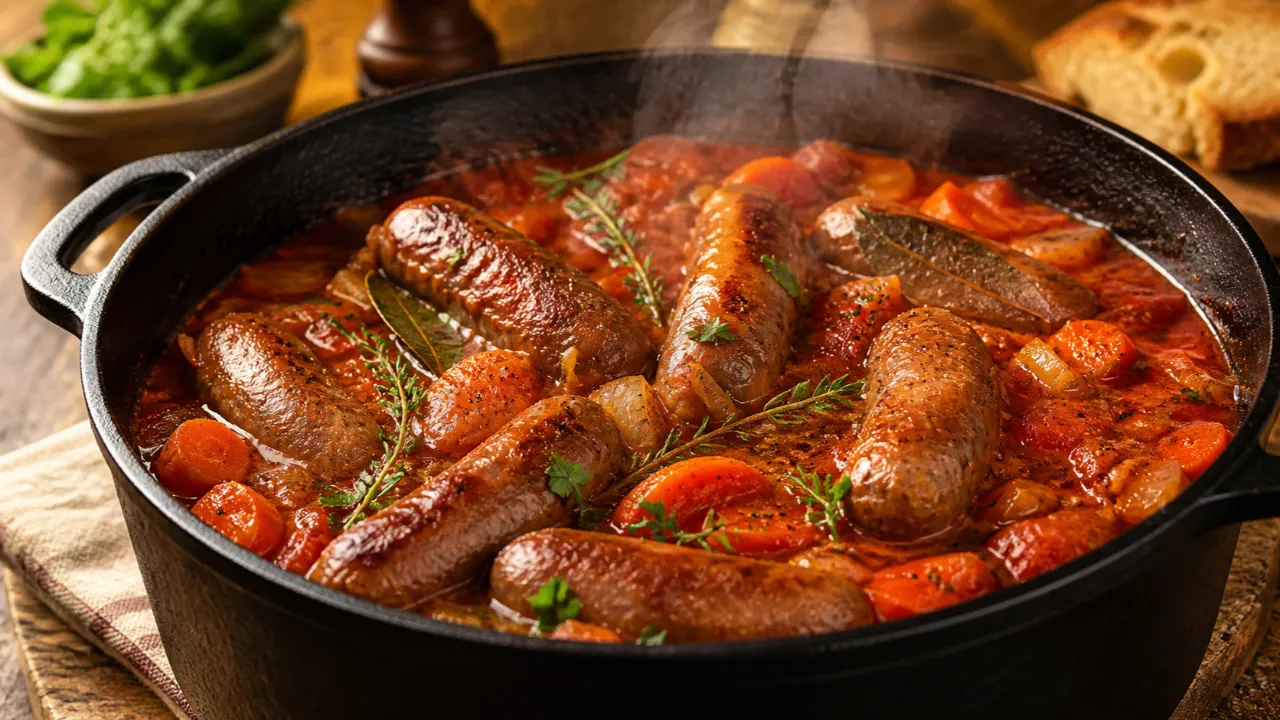
Every good home cook needs a reliable, no-fuss dinner they can turn to on a cold night. This sausage casserole ticks every box. Thick pork sausages get browned until golden, then braised low and slow in a rich tomato sauce packed with soft vegetables. You can cook it straight on the hob, slide the whole pot into the oven, or let the slow cooker do all the work while you get on with your day. It feeds the whole family without fuss, and the leftovers are even better the next morning. All you need is a handful of everyday ingredients and about an hour of relaxed cooking.
- ✓ Sausage casserole is a classic one-pot comfort meal that’s easy for beginners.
- ✓ Browning the sausages first builds deep, rich flavour.
- ✓ Slow simmering thickens the sauce and keeps sausages tender.
- ✓ The dish tastes even better the next day — perfect for meal prep.
- ✓ Works on the hob, oven, or slow cooker with minimal changes.
- ✓ Easily adaptable — add beans, cream, or spice to customize.
Cooking Time Breakdown
Breaking the cook time into stages makes it easy to stay on top of things and time your sides perfectly.
| Stage | Time |
|---|---|
| Prep vegetables (chop onion, carrots, celery, garlic) | 10 minutes |
| Brown the sausages | 6–8 minutes |
| Cook the vegetables and build the sauce | 8–10 minutes |
| Slow simmer with lid on | 25–30 minutes |
| Final seasoning and resting | 2–3 minutes |
| Total | ~55 minutes |
What Is Sausage Casserole?
A sausage casserole is a slow-braised, single-pot comfort meal where sausages cook gently in a tomato-based sauce alongside vegetables and fresh herbs. Everything gradually melds together into something much greater than the sum of its parts.
Key Characteristics of the Dish
The thing that makes this hearty sausage casserole stand out is how much flavour you can build from simple steps. Starting by browning the sausages properly lays down a rich, meaty foundation. Onions, garlic, and carrots then soften in the same pan, absorbing all those caramelised bits left behind. Once the chopped tomatoes, stock, and Worcestershire sauce go in, the whole thing transforms into a deeply savoury tomato sauce. Rosemary, thyme, and bay leaves layer in a gentle herbal background. After simmering, you’re left with a thick, glossy sauce that clings to the sausages beautifully — something a quick midweek fry-up could never achieve.
Why This Meal Is So Popular
The appeal is straightforward. It’s budget-friendly, requires no specialist equipment, and the prep work takes under 10 minutes. You can double the batch without changing a single thing about the method. It reheats brilliantly, making it perfect for packed lunches or second dinners. Most importantly, it’s genuinely satisfying — the kind of hearty meal that people actually look forward to sitting down to.
Looking for more simple meal ideas? Explore these easy dinner recipes for quick and practical everyday cooking inspiration.
Why You’ll Love This Recipe
Rich Comfort Food
Few meals are as warming and filling as a slow-cooked savoury sausage dish on a cold evening. The sauce thickens into something sticky and rich, the sausages turn beautifully tender, and the whole kitchen smells incredible while it simmers. It’s classic comfort food — the kind of dinner that feels like a reward at the end of a long day.
Easy Family Dinner
Nothing here is technically demanding. The process is straightforward — brown the sausages, soften the vegetables, build your sauce, and leave the heat to do the rest. First-time cooks will find it forgiving and confidence-building. Experienced cooks will appreciate how little it asks of them on a busy evening.
Great for Meal Prep
Cook a generous pot over the weekend and you’ve quietly sorted out several weekday meals in one go. The sauce develops and deepens as it rests, so the version you eat on day two or three will honestly taste better than the freshly made original.
Ingredients You’ll Need
Main Ingredients
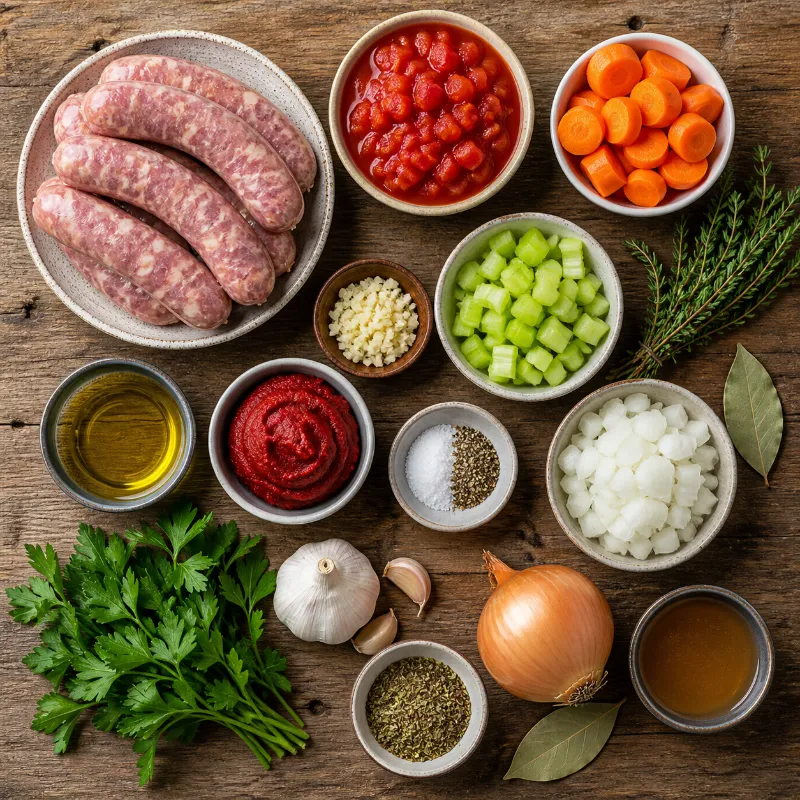
| Ingredient | Amount (Serves 4) | Notes |
|---|---|---|
| Pork sausages | 8 thick sausages | Cumberland or Lincolnshire work well |
| Onion | 1 large | Diced |
| Garlic | 3 cloves | Minced or finely sliced |
| Carrots | 2 medium | Peeled, sliced into chunky rounds |
| Celery | 2 sticks | Sliced |
| Chopped tomatoes | 1 × 400g tin | Or passata |
| Chicken or veg stock | 300ml | Adds depth |
| Tomato purée | 2 tablespoons | Intensifies the sauce |
| Worcestershire sauce | 1 tablespoon | Adds umami |
| Olive oil | 1 tablespoon | For frying |
Optional Ingredients
- Cannellini beans or butter beans — Bulks the dish out and boosts protein
- Red or green peppers — Brings sweetness and colour to the sauce
- Smoked paprika — Introduces a warm, smoky undertone
- Red wine — A small splash added before the stock gives extra depth
- Mushrooms — Adds an earthy, meaty texture
- Potatoes — Makes it a genuinely complete one-pot meal
Herbs and Seasonings
- 1 bay leaf
- 1 tsp dried thyme (or a few fresh sprigs)
- ½ tsp dried rosemary
- Salt and black pepper to taste
- A small pinch of sugar (softens the sharpness of tinned tomatoes)
Best Sausages for This Recipe
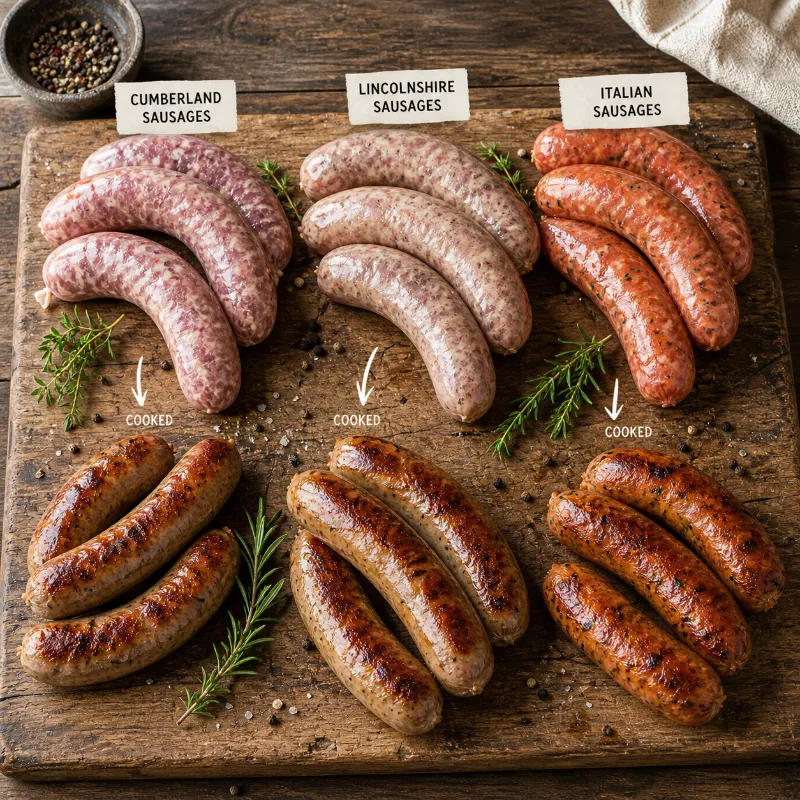
The sausage you choose shapes the character of the whole dish. Here’s a quick guide to the most popular options.
Cumberland sausages are the most widely used choice in a traditional British sausage casserole. Their high pork content and coarse, peppery seasoning hold up well to the long simmer and produce a deeply savoury sauce.
Lincolnshire sausages are a close second. Seasoned with sage and a touch of nutmeg, they add a slightly more herbal note that complements the rosemary and thyme in the sauce.
Italian sausages — either mild or hot — work brilliantly if you want a punchier, more robustly flavoured dish. They pair especially well with the spicy variation or when you add fennel and red peppers.
Chicken sausages are a lighter alternative with a more delicate flavour. They work well in the creamy or healthy versions of the recipe. Because they’re leaner, they’re a little less forgiving if overcooked, so keep the heat low and steady.
Whatever you use, buy the thickest sausages you can find. Thin ones tend to overcook and lose their texture during the braising stage.
Ingredient Purpose Table
Knowing the role of each ingredient makes you a smarter cook and helps you adapt the recipe with confidence.
| Ingredient | Purpose | Possible Substitute |
|---|---|---|
| Pork sausages | Main protein and flavour base | Chicken, turkey, or plant-based sausages |
| Chopped tomatoes | Forms the sauce base | Passata or fresh tomatoes |
| Worcestershire sauce | Adds umami depth and savouriness | Soy sauce or Henderson’s Relish |
| Cannellini beans | Adds protein and bulk | Butter beans or chickpeas |
| Tomato purée | Intensifies and thickens the sauce | Sun-dried tomato paste |
| Stock | Creates body and depth in the sauce | Water + extra seasoning (less ideal) |
| Bay leaves | Subtle herbal background flavour | Omit or replace with a thyme sprig |
| Carrots | Natural sweetness and texture | Parsnip or sweet potato |
| Celery | Savoury base note (mirepoix element) | Fennel or leek |
| Onion | Foundational flavour base | Shallots or leek |
| Garlic | Aromatic depth | Garlic paste or garlic powder |
| Pinch of sugar | Balances tomato acidity | Balsamic vinegar (a few drops) |
Equipment Needed
Essential Equipment
- Large casserole dish or heavy-bottomed pan — Cast iron or a Dutch oven holds heat evenly and works beautifully here
- Wooden spoon or spatula — Needed for stirring and lifting browned bits from the base
- Sharp knife and chopping board
- Measuring jug — For accurate stock quantities
Optional Equipment
- Slow cooker — Ideal for a completely hands-off approach (full instructions in the slow cooker section)
- Oven-safe pot — Lets you transfer the whole dish into a 170°C / 340°F oven for a more deeply developed flavour
How to Make It (Step-by-Step)
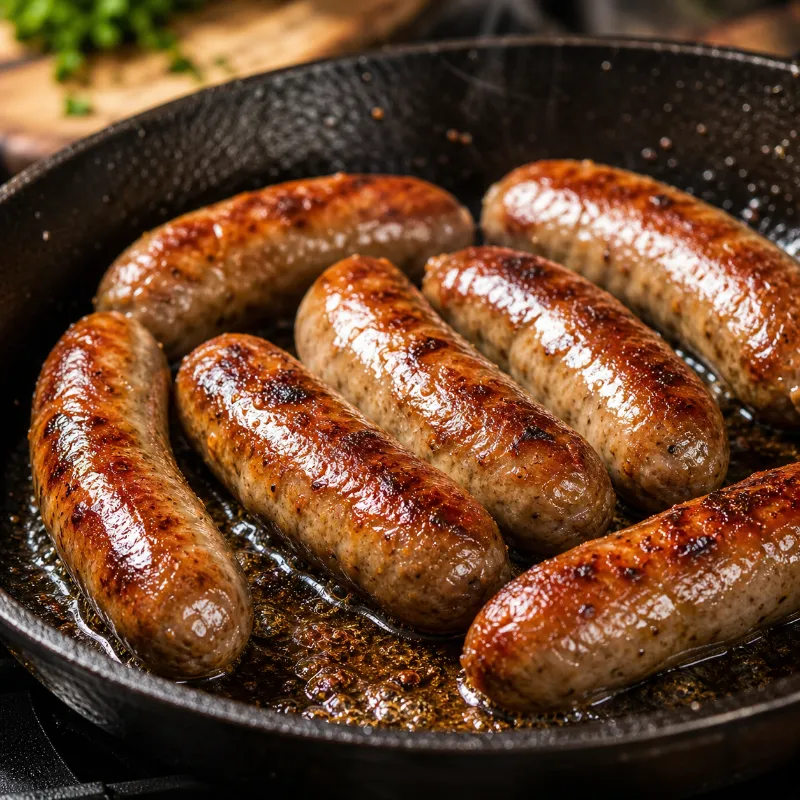
The whole recipe comes together in one pot over roughly 55 minutes. Each stage matters, so work through them in order.
Expert Cooking Tips
Browning for Flavour
The browning stage is non-negotiable if you want a deeply flavoured result. A properly hot pan, enough space for the sausages to sit without touching, and the patience not to move them too soon — that’s all it takes to build a flavour base that transforms the finished dish.
Using Quality Stock
The stock you use quietly shapes the entire dish. A decent homemade batch or a well-made shop-bought stock adds real body and depth. A basic stock cube dissolved in too much water tends to make everything taste thin and salty. Chicken stock is the most flexible option and works with all sausage types.
Tip: Got smoked sausages or a handful of lardons? Render those first before the main sausages go in. Cook your vegetables in the fat they release and the smokiness will thread all the way through the finished sauce.
Slow Simmer Benefits
High heat is the enemy of this recipe. A low, patient simmer keeps the sausage meat tender and the vegetables intact. It also gives the tomatoes and herbs time to settle into the sauce properly, producing a far more rounded and complex result than a 10-minute blast on full heat ever could.
Balancing Tomato Acidity
A tin of chopped tomatoes often brings a sharp, slightly metallic edge. A small pinch of sugar stirred in early softens this without pushing the dish into sweet territory. Alternatively, half a teaspoon of balsamic vinegar added just before serving does the same job while adding a layer of complexity — a trick widely used in professional kitchens.
Slow Cooker Version
Want dinner waiting for you when you get home? This sausage casserole adapts brilliantly to the slow cooker. You get all the flavour of the original recipe with almost zero active cooking time during the day.
Ingredients
Everything stays the same as the main recipe with one adjustment: reduce the stock from 300ml to 200ml. Slow cookers trap moisture far more efficiently than an open hob, so using the full amount results in a watery, over-diluted sauce.
Cooking Method
Don’t skip the browning stage just because you’re using a slow cooker. Colour the sausages in a pan first, then soften the onions and garlic in the same pan. Transfer everything into the slow cooker, add all the remaining ingredients, and set it going. For low heat, allow 6–8 hours. For high heat, allow 3–4 hours. The dish is fairly forgiving — an extra hour on low won’t ruin it.
Common Problems
| Problem | Cause | Fix |
|---|---|---|
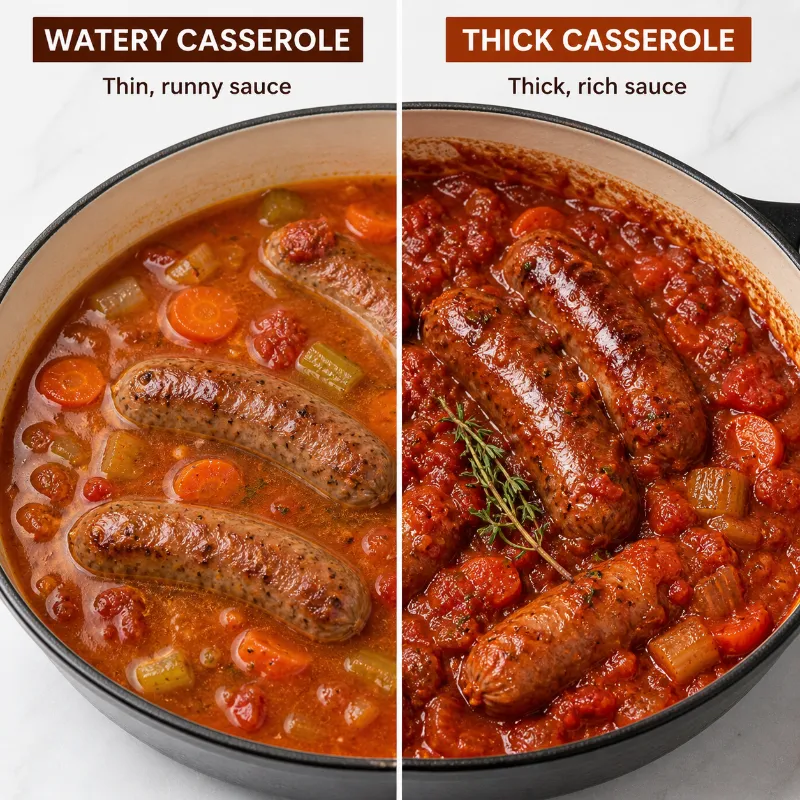
| Sauce is watery | Too much liquid added | Remove lid for last 30 mins or use cornflour slurry |
| Sausages pale and soft | Not browned first | Brown sausages before adding |
| Dish tastes flat | No final seasoning | Season well + add Worcestershire sauce |
| Vegetables too mushy | Overcooked / cut too small | Cut larger + cook on low heat |
What to Serve With It
Classic Sides
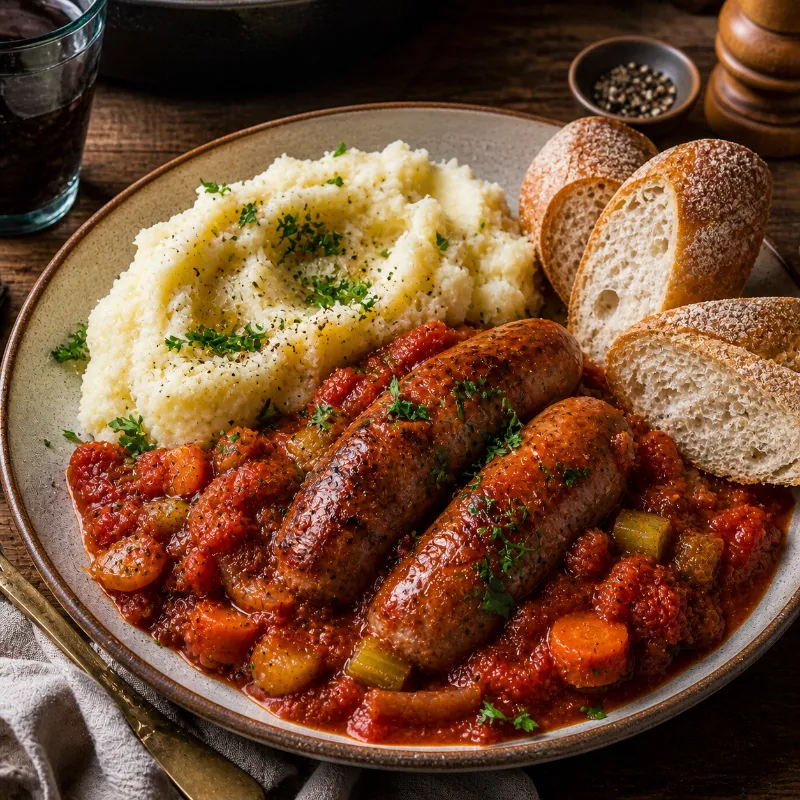
- Creamy mashed potato — Nothing soaks up a thick tomato sauce better. This is the classic pairing for good reason.
- Crusty bread — A wedge of good bread for wiping the bowl clean is almost mandatory.
- Rice — A simple and reliable base that pairs well with the richness of the sauce.
- Buttered noodles or pasta — Particularly good alongside the creamy variation.
Lighter Options
- Steamed green beans or broccoli — Cuts through the richness with some welcome freshness.
- Simple green salad — A lightly dressed salad on the side works surprisingly well.
- Cauliflower mash — All the comfort of regular mash with fewer carbohydrates.
Popular Variations
Bean Version
Tip in a drained 400g tin of cannellini beans or butter beans for the final 15 minutes of cooking. They soak up the sauce and add a creamy, filling quality that makes the dish go much further. A great option for feeding a larger group without buying more sausages.
Spicy Version
Swap out the standard sausages for chorizo or spicy Italian-style ones. Stir in a teaspoon of smoked paprika and a pinch of dried chilli flakes, and dice a red pepper into the vegetable base. The result is a smokier, punchier dish with noticeably more heat.
Creamy Version
With about 5 minutes of cooking time left, pour in 100ml of single cream or crème fraîche and gently stir it through. Don’t let it boil — just bring it up to temperature. A handful of chopped flat-leaf parsley to finish, then serve over buttered tagliatelle for something genuinely special.
Healthy Version
Switch to reduced-fat chicken or turkey sausages and use a low-sodium stock. Pack in more vegetables — diced courgette, sliced peppers, and a handful of spinach added in the last 10 minutes all work well. Replace the tablespoon of olive oil with a few sprays of cooking oil.
Make It Ahead
This is one of the rare recipes that genuinely benefits from being cooked in advance. Flavour, texture, and depth all improve with time.
Preparing the day before: Follow the full recipe as written. Once it’s done, leave it to cool to room temperature before sealing it in an airtight container. Refrigerate overnight. To serve, reheat it gently on the hob, adding a small splash of stock or water if the sauce has become too thick.
Why it tastes better the next day: Resting overnight does something remarkable. The vegetables slowly absorb the sauce. The herbs release more of their flavour. The fat distributes evenly through the liquid. The result is a more rounded, cohesive dish that tastes like it’s been cooking for far longer than it has.
Preparing further in advance: This dish holds well for up to 2 full days in the fridge under a tight-fitting lid. Reheat thoroughly before eating. It also freezes exceptionally well — full details are in the storage section below.
Meal prep tip: Planning a dinner party or a big family meal? Make the casserole the day before, refrigerate it overnight, then simply reheat while you prepare everything else. Your kitchen stays calm, the food tastes better, and you’re not stuck at the hob when guests arrive.
Estimated Nutrition (Per Serving)
Nutritional values are approximate and based on the base recipe using thick pork sausages, a 400g tin of chopped tomatoes, and 300ml chicken stock. Brand differences and any additions will affect these figures.
| Nutrient | Amount (Per Serving) |
|---|---|
| Calories | ~480 kcal |
| Protein | 24 g |
| Carbohydrates | 22 g |
| of which sugars | 10 g |
| Fat | 28 g |
| of which saturates | 9 g |
| Fibre | 6 g |
| Salt | ~1.8 g |
To reduce calories: Switching to reduced-fat sausages and replacing the olive oil with a light spray is the simplest swap. Adding beans and extra vegetables increases fibre and protein with minimal impact on calories.
Storage and Reheating
Refrigeration
Let the dish cool fully before moving it to an airtight container. It keeps well in the fridge for up to 3 days, and the flavour will noticeably improve by the second day as everything continues to settle.
Freezing
This one-pot meal freezes exceptionally well. Cool it completely, divide into individual or family-sized portions, seal tightly, and freeze for up to 3 months. Write the date on each container. Move from the freezer to the fridge the night before you plan to eat it and allow it to defrost slowly overnight.
Freezing tip: Individual portions are incredibly practical. Pull one from the freezer the evening before and it’s ready to reheat by lunchtime the next day — with no extra effort required.
Reheating
The hob is the best method. Heat the casserole over a medium-low flame, stirring it regularly, until it’s piping hot right through. A splash of stock loosens it up nicely if the sauce has thickened during storage. Always check that the sausages have reached 75°C / 165°F at the centre before serving.
| Method | Time | Notes |
|---|---|---|
| Hob (from fridge) | 8–10 minutes | Medium-low heat; stir regularly |
| Microwave (from fridge) | 4–5 minutes | 2-minute bursts; stir between each |
| Oven (from fridge) | 20 minutes at 170°C | Cover with foil to retain moisture |
| From frozen (hob) | 15–20 minutes | Defrost overnight first |
Common Cooking Mistakes (And How to Fix Them)
Even a recipe this straightforward has a few pitfalls. Knowing what to watch for means you’ll avoid the most common issues before they happen.
1. Not Browning the Sausages
This is where most people go wrong. Putting pale sausages straight into the sauce produces a dish that tastes dull and flat no matter how long you cook it. The browning step takes less than 10 minutes and makes a transformative difference to the depth and richness of the final sauce. It is not optional.
2. Adding Too Much Liquid
A common instinct is to add more liquid thinking it creates more sauce. It doesn’t. Excess stock or tomato just dilutes everything and takes a long time to cook off. Follow the quantities in the recipe. If you’ve accidentally added too much, take the lid off and let the excess evaporate on a gentle simmer for 10–15 minutes.
3. Cooking on Too High a Heat
Cranking up the heat to cook it faster is a reliable way to ruin this dish. High temperatures cause sausage skins to burst, make the meat tough, and push the sauce to reduce too fast and catch on the pan. After the initial boil, the heat must come down to low and stay there.
4. Not Seasoning at the End
Seasoning at the start sets the base. But as liquids reduce and flavours concentrate, the dish’s balance shifts. Always taste the sauce just before serving and correct it. A little salt, a grind of pepper, or a splash of Worcestershire sauce is often all it needs to go from good to excellent.
5. Cutting Vegetables Too Small
Small pieces of onion, carrot, or celery will essentially dissolve into the sauce during the long simmer. This creates a uniform mush with no textural contrast. Cut your vegetables generously — large dice for the onion, thick rounds for the carrots, chunky pieces for the celery.
6. Lifting the Lid Too Often
Steam and heat escaping from the pot every few minutes disrupts the cooking environment and slows everything down. Resist checking it constantly. Stir it once or twice during the simmer, but otherwise leave the lid on and trust the process.
| Mistake | Result | Fix |
|---|---|---|
| Skipping browning | Flat, pale-tasting dish | Brown sausages for 6–8 minutes first |
| Too much liquid | Thin, watery sauce | Simmer uncovered to reduce and thicken |
| High heat | Tough sausages, scorched base | Keep on low after initial boil |
| No final seasoning | Under-seasoned dish | Taste and adjust before serving |
| Vegetables cut too small | Mushy texture | Cut into larger, chunkier pieces |
| Lifting lid constantly | Slow cooking, weak sauce | Check occasionally, not constantly |
Frequently Asked Questions
For another classic version of this dish, you can also check out this BBC sausage casserole recipe for additional cooking ideas and serving inspiration.
Final Thoughts
Once you’ve made this sausage casserole a few times, you’ll stop looking at the recipe entirely. It becomes instinctive — the kind of dish you throw together based on what’s in the fridge, confident it’s going to work out. The method is forgiving, the result is reliably satisfying, and the whole thing costs very little to put on the table.
Whether you’re making it on a quiet Sunday afternoon, programming the slow cooker on a hectic Monday morning, or pre-cooking for the week ahead — this hearty sausage stew consistently earns its place in the dinner rotation. Make it once and it’s yours for life.
Always ensure sausages reach an internal temperature of 75°C (165°F) before serving.