Dessert Recipes (Easy Guide for Beginners)
Making dessert recipes at home sounds exciting. However, many people face problems when they try for the first time. A cake may turn dry, a pudding may stay runny, or a cheesecake may crack. Because of this, beginners often feel confused and lose confidence.
From my experience, these problems usually come from small mistakes. It is not about skill level. It is about understanding the basics and choosing the right method. I have made these mistakes myself, but once I fixed them, my results improved quickly.
Quick Takeaways
- Start with simple desserts if you are a beginner
- No-bake options are easier and safer
- Always measure ingredients correctly
- Small mistakes can affect taste and texture
- Practice helps you improve over time
How to Choose the Right Dessert
Many people fail because they pick something too complex at the start. Choosing the right option based on your situation can save time and effort.
| Situation | Best Choice |
|---|---|
| Short on time | Mug cake or quick sweets Fast |
| No oven available | No-bake cheesecake or mousse No Bake |
| First time trying | Simple pudding or cookies Easy |
| Family dessert | Apple crumble or brownies Popular |
| Special event | Cheesecake or layered dessert Premium |
This simple approach increases your chances of success.
Easy Dessert Recipes
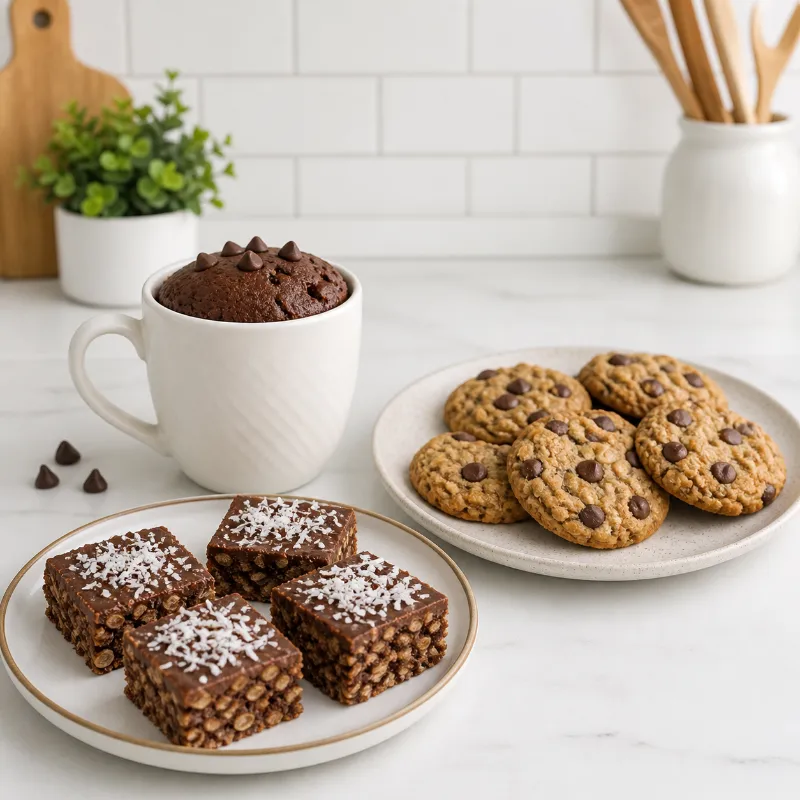
Easy desserts are best for beginners. They use simple steps and basic ingredients. You do not need advanced skills to make them.
Examples include mug cakes, simple cookies, and no-bake sweets. These options are quick and reliable, so they are a good starting point.
Popular Dessert Recipes
Some desserts are loved everywhere because they are simple and tasty.
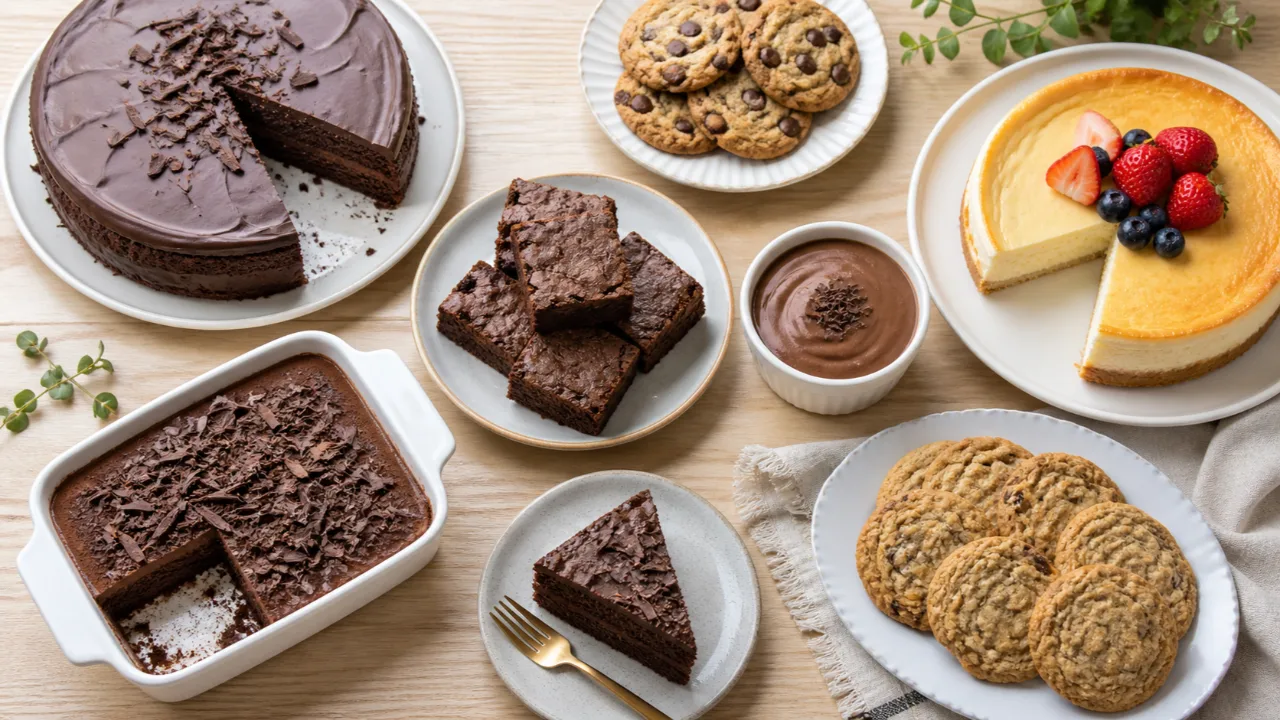
Popular choices include cheesecake, brownies, chocolate cake, and cookies. These are often made for family meals and special occasions.
Types of Desserts Explained
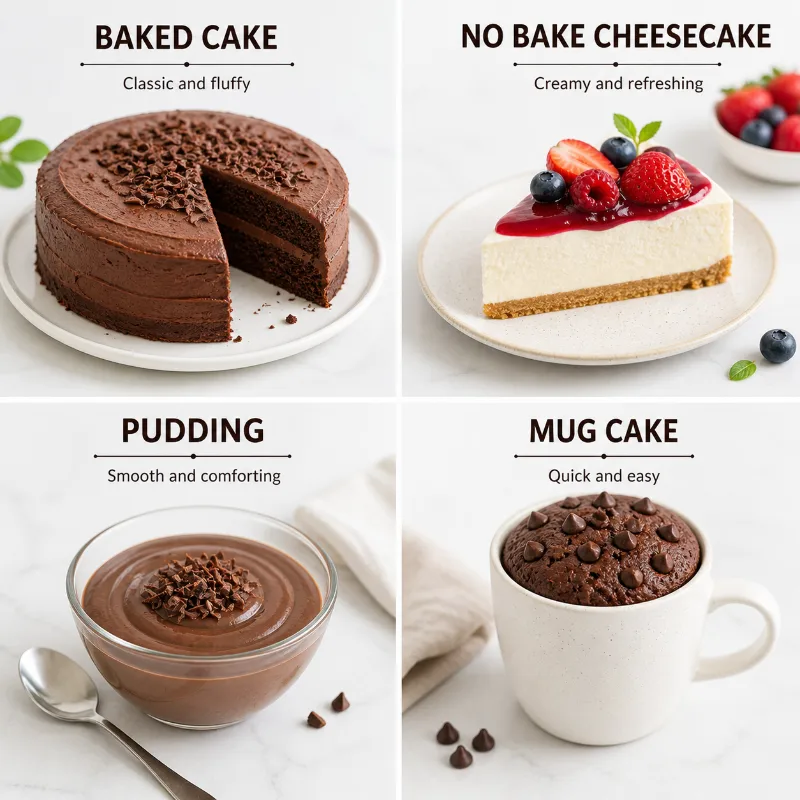
Sweet dishes come in different types. Each type uses a different method and level of effort.
Baked Desserts
These include cakes, cookies, and brownies. They need an oven and proper timing.
No-Bake Desserts
These include cheesecake, mousse, and tiramisu. They are easier and do not require baking.
Stove-Top Desserts
Puddings and custards fall into this category. They require constant attention.
Quick Desserts
These are fast options like mug cakes or fruit-based sweets.
If you’re looking for more quick and beginner-friendly sweet treats, explore these easy dessert recipes from BBC Food.
Chocolate Desserts
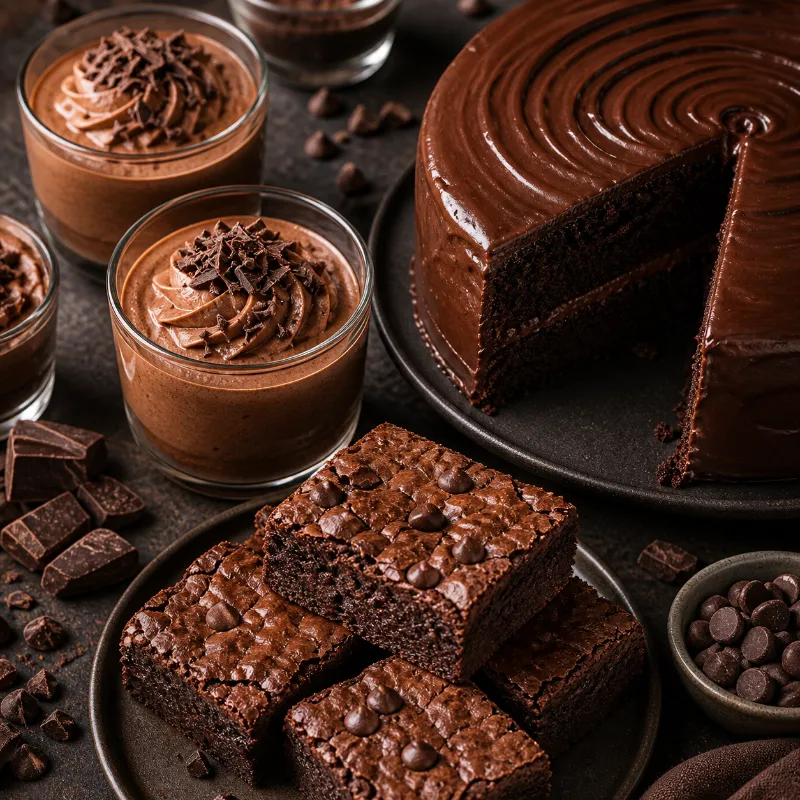
Chocolate-based sweets are very popular because of their rich taste. Options like brownies, chocolate cake, and mousse are common choices.
They are often used for celebrations or when you want something indulgent.
Cheesecake Recipes
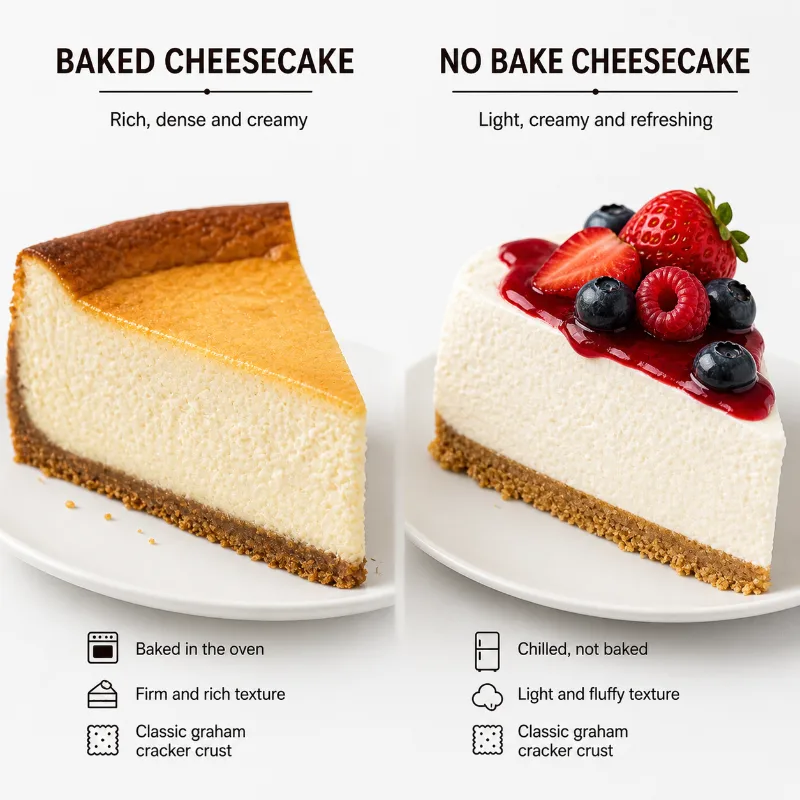
Cheesecake is one of the most popular dessert types. There are two main styles: baked and no-bake.
Baked versions have a firm texture, while no-bake options are softer and easier to prepare.
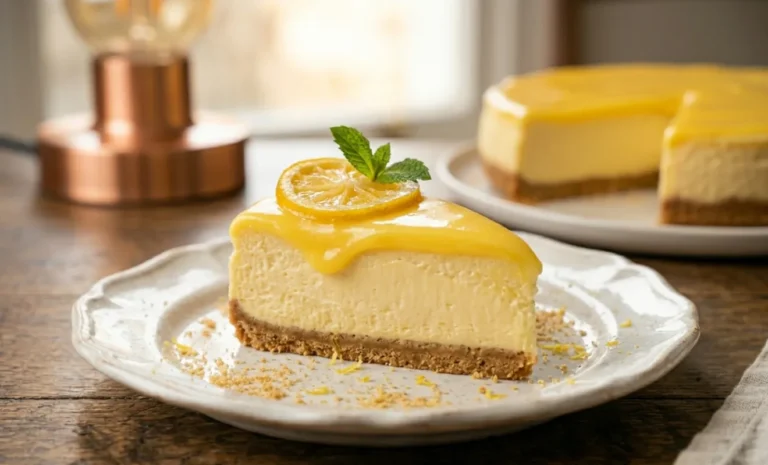
For a detailed step-by-step method, try our creamy lemon cheesecake recipe with foolproof instructions from crust to topping.
Puddings and Soft Desserts
Soft desserts are simple and comforting. They are easy to make and require fewer ingredients.
Common examples include custard, rice pudding, and basic milk-based sweets.
Beginner Setup for Better Results
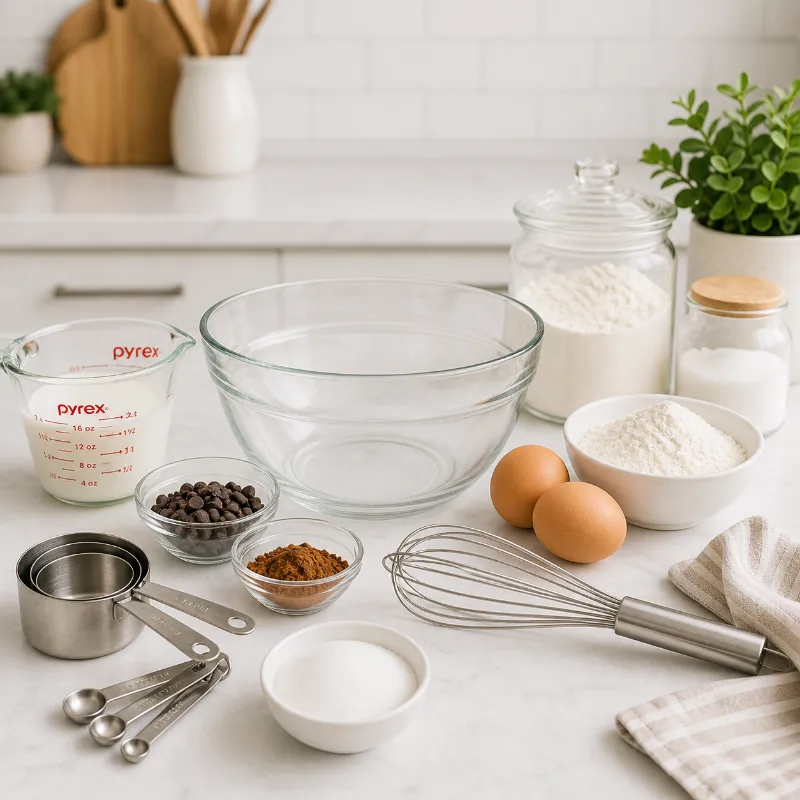
If you want better results, prepare your setup first.
Basic Tools You Need
- Mixing bowls
- Measuring cups and spoons
- Whisk or spoon
- Oven or microwave
How to Measure Ingredients Correctly
Many beginners guess quantities, which often leads to failure.
- Use proper measuring tools
- Level dry ingredients
- Use liquid cups for milk or oil
From my experience, correct measurement improves results quickly.
Why Room Temperature Ingredients Matter
Cold ingredients do not mix well. This can affect texture.
- Let eggs, milk, and butter sit before use
Understanding Ingredients
Knowing what each ingredient does helps you avoid mistakes.
- Flour gives structure
- Sugar adds sweetness and softness
- Butter adds moisture and flavor
- Eggs help bind everything
- Baking powder helps the mixture rise
Common Problems and Fixes
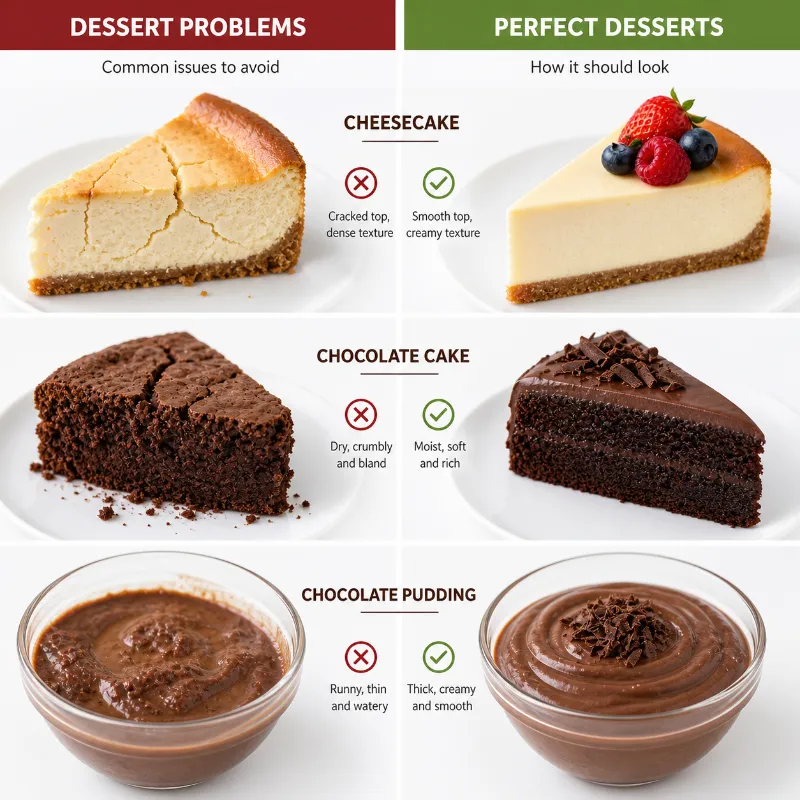
Even simple desserts can go wrong. However, most issues are easy to fix.
Cake Issues
- Dry texture → Reduce baking time or add syrup
- Not rising → Check baking powder
Cheesecake Issues
- Cracks on top → Avoid overbaking
- Too soft → Chill longer
Pudding Issues
- Too thin → Cook longer
- Lumpy texture → Stir continuously
Mistakes to Avoid
Avoiding mistakes is easier than fixing them later.
- Overmixing batter
- Skipping preheating
- Using incorrect measurements
- Not following timing
Smart Selection Tips
Instead of trying random options, choose based on your need.
- Want something fast → Mug cake
- Want easy method → No-bake option
- Want rich taste → Baked option
- Want simple cleanup → Pudding
How to Improve Your Skills
Improvement comes with practice.
- Start with simple recipes
- Repeat to understand patterns
- Fix one mistake at a time
- Be patient and follow steps
From my experience, repeating simple methods helps more than trying complex ones.
FAQs
Final Thoughts
From my experience, dessert recipes become easier when you understand the basics. I have seen that even simple methods can give great results if you follow the right steps. Over time, you gain confidence and improve naturally. Stay consistent, and your results will improve step by step.