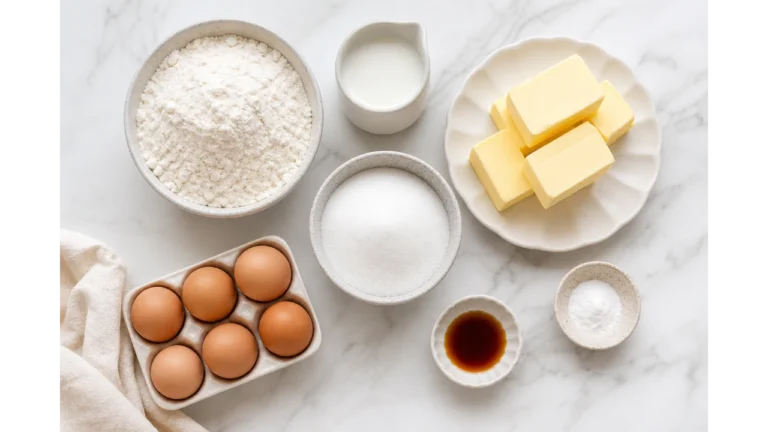
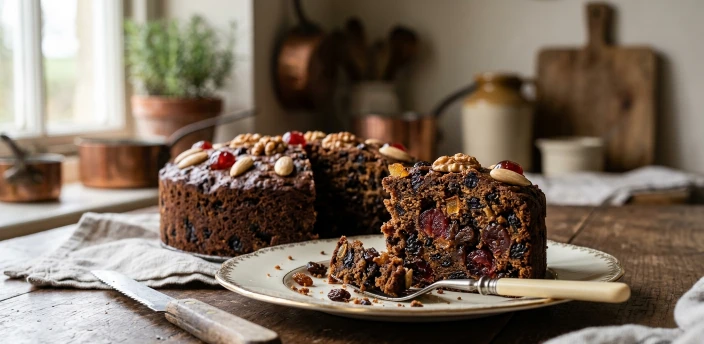
Moist Fruit Cake Recipe (Easy & Perfect Every Time)
A great fruit cake recipe is one of the most rewarding things a home baker can master. It is rich, deeply flavoured, and stays moist for days — sometimes weeks — after baking.
Most people who dislike fruit cake have only ever eaten a dry, stale version. Made well, it is nothing like that. The crumb is tender and buttery, the fruit is plump and sweet, and the flavour deepens as it rests.
This guide gives you everything you need: tested quantities, nine clear steps, expert tips, and honest answers to the questions bakers ask most. Whether this is your first bake or you are looking to explore more, our complete cake recipes guide covers everything from beginner mug cakes to layered birthday cakes. Either way, you will find something useful here.
Quick Answer
A fruit cake is a dense cake made with dried fruits, butter, flour, eggs, and warm spices. It is baked slowly at a low temperature to develop a rich, deep flavor and consistently moist texture. The high ratio of dried fruit — raisins, currants, and sultanas — is what gives it its characteristic density and long shelf life.
What Is a Fruit Cake?
Any good fruit cake recipe starts with the same core idea: a dense, richly flavored cake built on dried fruit, butter, eggs, flour, and warm spices. It is one of the oldest baked goods in the world and has a place in almost every baking tradition.
In the UK and Ireland, it is most closely linked to Christmas cake — a deeply fruited cake finished with marzipan and royal icing. In many other countries, simpler versions are baked year-round with no special occasion needed.
What separates it from a standard sponge? The high ratio of dried fruit — raisins, currants, sultanas — creates a dense, chewy texture. Brown sugar and butter build a rich base. A low oven temperature and a long, slow bake let the centre cook evenly without the edges burning.
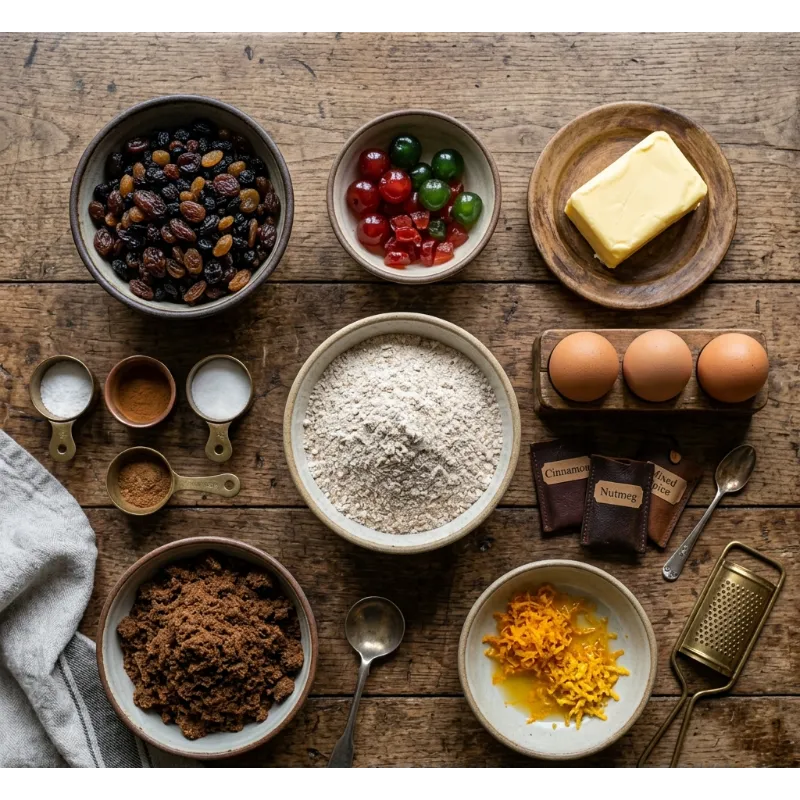
Fruit Cake Recipe Ingredients
Ingredient quality is where this cake either succeeds or falls short. Each component has a specific job — skip or substitute carelessly and the result will show. Use the table below as your shopping guide.
Fruit Cake Ingredients and Quantities (Makes One 8-inch / 20cm Round Cake)
| Ingredient | Quantity | Key Notes |
|---|---|---|
| Mixed dried fruit Base | 500g / 3 cups | Soak overnight for the best texture |
| Glacé cherries Sweet | 100g / ½ cup | Halved; adds sweetness and color |
| Candied peel Optional | 50g / ¼ cup | Adds useful citrus depth |
| Unsalted butter Fat | 225g / 1 cup | Softened to room temperature |
| Dark or light brown sugar Flavor | 225g / 1 cup | Dark gives a deeper, molasses-like flavor |
| Eggs Binding | 4 large | Room temperature — this matters for the batter |
| Plain (all-purpose) flour Structure | 250g / 2 cups | Sifted before use |
| Baking powder Lift | 1 tsp | Provides a small, controlled lift |
| Mixed spice Aroma | 2 tsp | Or: 1 tsp cinnamon + ½ tsp nutmeg + ½ tsp allspice |
| Vanilla extract Balance | 1 tsp | Rounds out and balances the other flavors |
| Fresh orange zest Fresh | 1 tbsp | Freshly grated — bottled orange flavor is not the same |
| Brandy or orange juice Soaking | 3 tbsp | For soaking the dried fruit |
Dried Fruit
Dried fruit is the foundation of the cake. Raisins are plump, sweet, and easy to find. Currants are smaller with a more concentrated, slightly tart flavor. Sultanas are softer and milder — they balance the stronger notes without dominating.
Glacé cherries bring pops of colour and jammy sweetness in every slice. Candied peel adds a citrusy, gently bitter edge that cuts through the richness of the batter and keeps the overall flavour from becoming too sweet.
Soaking the fruit overnight is the single most impactful thing you can do. The fruit absorbs the liquid, swells, and releases that moisture slowly during baking. The result is a crumb that stays tender long after the cake has cooled.
Fruit Substitution Guide for Fruit Cake
| Original Fruit | Best Substitute | How the Flavor Changes |
|---|---|---|
| Raisins Classic | Dried cranberries Swap | More tart; adds a brighter color |
| Currants Sharp | Finely chopped dried blueberries Mild | Milder and less sharp |
| Glacé cherries Sweet | Dried sour cherries Intense | Less sweet; more intense flavor |
| Candied peel Citrus | Finely chopped dried apricots Soft | Softer texture; less citrus punch |
| Sultanas Similar | Golden raisins Easy | Very similar — slightly sweeter |
| Any mix Flexible | Dried mango + pineapple Tropical | Tropical variation; sweeter overall |
Essential Baking Ingredients
The batter starts with softened butter, brown sugar, and eggs. When creamed together properly, butter and sugar form a smooth, slightly airy base that carries the weight of all that fruit. Cold butter will not incorporate correctly — always bring it to room temperature first.
Plain flour gives the cake its structure. Baking powder adds just enough lift to keep it from being brick-like without making it too airy. The spice blend is where most of the character comes from — mixed spice is the easiest option, but measuring cinnamon, nutmeg, and allspice separately gives you more control over the final flavour.
Ingredients That Make a Real Difference
Vanilla extract is easy to overlook, but it quietly smooths out the other flavours and adds a warmth that is hard to identify but obvious when it is missing. Fresh orange zest, grated directly over the batter, makes the cake taste brighter and less heavy.
For a darker, richer result, stir a tablespoon of black treacle or molasses into the batter. It introduces a subtle caramel undertone that pairs well with the warming spices and gives the cake a deeper color.
Cold black tea is an excellent alcohol-free substitute for brandy in the fruit soak. It adds tannin depth and a slightly earthy note that enhances the dried fruit rather than simply adding liquid.
Equipment Needed for This Fruit Cake Recipe
You do not need specialist equipment to bake a good fruit cake. A few everyday baking items and one simple preparation step are all it takes.
- A deep 8-inch (20cm) round cake tin — depth matters for even baking across a long cook time
- Parchment paper — for lining the tin and preventing burnt or stuck edges
- A stand mixer or hand electric mixer makes the creaming stage much easier
- A large mixing bowl — for folding in the fruit by hand at the end
- Kitchen scales — weight is far more reliable than volume for consistent baking
- An oven thermometer — domestic ovens often run 10–20°C hotter or cooler than the dial shows
- A metal skewer or thin knife — the only reliable way to test whether the centre is done
Preparing the tin correctly is one of the most important steps for this particular cake. Double-line the inside with parchment paper and wrap the outside of the tin with a band of brown paper tied with kitchen string. This insulates the edges and stops them from overcooking during the long bake.
💡 No brown paper? Several layers of folded newspaper wrapped around the tin work just as well and cost nothing.
The All-in-One Method – Quickest Route to a Moist Bake
The all-in-one method skips the traditional creaming stage entirely. Add the softened butter, sugar, eggs, flour, baking powder, and spices to a single large bowl and mix until smooth. Then fold the soaked fruit in by hand.
The crumb will be slightly denser than the traditional method produces, but the flavour is just as good. For first-time bakers or anyone short on time, it is a completely reliable approach.
💡 Even when using the all-in-one method, soak the fruit overnight. That single step has a bigger effect on moisture than anything else in this recipe.
How to Make Fruit Cake – Step-by-Step Instructions
Follow these nine steps for a consistent, moist result every time. Read through the full process once before you start — each step will make more sense in context.
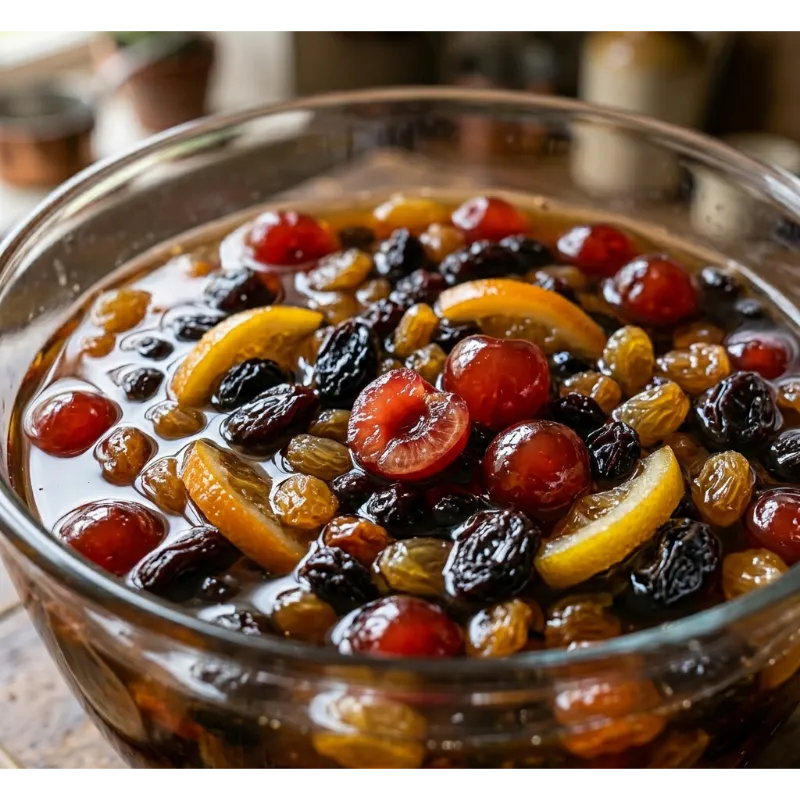
- Soak the fruit the night before. Combine the dried fruit, halved glacé cherries, and candied peel in a bowl. Add the brandy or orange juice, stir well, and cover tightly with cling film. Leave overnight or for at least 4 hours.
- Prepare your oven and tin. Preheat to 150°C (300°F / Gas Mark 2). Double-line your cake tin with parchment paper and wrap the outside with brown paper secured with kitchen string.
- Cream the butter and sugar. Beat softened butter and brown sugar together for 4–5 minutes until the mixture is pale and noticeably fluffy. This step builds air into the batter — do not rush it.
- Add eggs one at a time. Beat thoroughly after each egg before adding the next. If the mixture looks split or curdled, add a tablespoon of flour and beat again — it will come together.
- Fold in the flour and spices. Sift the flour, baking powder, and mixed spice into the bowl. Use a large spatula to fold gently. Stop the moment no dry streaks remain — overmixing at this stage makes the crumb tough.
- Add the soaked fruit, zest, and vanilla. Fold the drained, soaked fruit into the batter along with the orange zest and vanilla extract. Make sure the fruit is distributed evenly throughout.
- Fill the tin. Spoon the batter in and smooth the surface. Press a shallow indent into the centre with the back of your spoon — this compensates for the dome that forms as the cake rises.
- Bake slowly. Place on the centre rack. Bake for 2.5–3 hours. Do not open the oven for the first 2 hours. Start checking at the 2-hour mark: insert a skewer into the centre and check that it comes out clean.
- Cool completely in the tin. Leave the cake in the tin until fully cool — this takes 1–2 hours. The structure is fragile when warm and will break if you try to remove it too soon.
Fruit Cake Baking Temperature and Time by Pan Size
| Tin Size | Oven Temperature | Baking Time | Approx. Servings |
|---|---|---|---|
| 6-inch / 15cm round Small | 150°C / 300°F / Gas 2 | 2 hrs – 2 hrs 30 min | 8–10 |
| 8-inch / 20cm round Standard | 150°C / 300°F / Gas 2 | 2 hrs 30 min – 3 hrs | 12–16 |
| 10-inch / 25cm round Large | 140°C / 285°F / Gas 1 | 3 hrs – 3 hrs 30 min | 20–24 |
| 12-inch / 30cm round Extra Large | 140°C / 285°F / Gas 1 | 3 hrs 30 min – 4 hrs | 28–32 |
| 900g loaf tin Loaf | 150°C / 300°F / Gas 2 | 1 hr 30 min – 2 hrs | 8–10 |
💡 Use an oven thermometer every time. A 10–15°C difference between the dial and actual temperature is common and can easily add or remove 20 minutes from the bake.
Is Fruit Cake Supposed to Be Moist?
Yes — a properly baked fruit cake should be dense but consistently moist throughout. The dried fruit retains its own moisture during baking and releases it slowly into the surrounding crumb.
Dry cake almost always comes down to one of three things: the fruit was not soaked beforehand, the cake was left in the oven too long, or it was stored uncovered after baking. Each of these is straightforward to prevent.
Many bakers also “feed” the cake once it is out of the oven. This means brushing a small amount of brandy over the surface, then rewrapping it tightly. Done once a week while the cake is resting, it builds moisture and deepens the flavour over time — the classic method for a Christmas cake that matures for weeks before serving.
Expert Tips for a Perfect Bake
These are the small habits that separate a reliable result from a great one. Each becomes second nature after the first couple of bakes.
- Soak the fruit overnight — even a few hours makes a clear difference to the final texture.
- Use room-temperature butter and eggs — cold butter does not cream properly; cold eggs can cause the batter to split.
- Double-line the tin — with a 2–3 hour bake, the extra parchment prevents over-browning at the edges.
- Bake at a low temperature — high heat cooks the outside before the dense centre has time to set.
- Keep the oven closed for the first 2 hours — cold air rushing in can cause the centre to sink.
- Toss soaked fruit in flour before folding it in — a light coating helps it stay suspended rather than sinking.
- Taste the batter before baking — a quick check on whether the spice balance needs adjusting before a 3-hour commitment.
- Let the cake cool fully in the tin — the structure is fragile when warm and will crack if handled too soon.
Common Problems and How to Fix Them
Fruit cake is forgiving once you understand what tends to go wrong. This table covers the most common issues, their most likely causes, and the practical fixes for each.
Fruit Cake Troubleshooting Guide
| Problem | Most Likely Cause | How to Fix It |
|---|---|---|
| Cake sinks in the centre Common | Oven opened too early or temperature too high | Lower the temperature; keep the oven closed for the first 2 hours |
| Dry, crumbly texture Texture | Overbaked or the fruit was not soaked | Reduce bake time; always soak dried fruit before use |
| Fruit sinks to the bottom Balance | Batter too loose or the fruit is still wet | Drain soaked fruit; toss in flour before folding in |
| Burnt edges, raw centre Heat | Oven too hot or tin not insulated | Drop temp by 10°C; wrap the outside of the tin with brown paper |
| Pale and gummy top Undercooked | Underbaked | Bake 15–20 minutes more; check the centre with a clean skewer |
| Too sweet overall Flavor | Heavy on glacé cherries or sweet fruit | Add currants or dried cranberries next time to balance the flavour |
| Tough, rubbery crumb Overmix | Batter overmixed after adding flour | Fold gently; stop as soon as the dry streaks disappear |
Variations Worth Trying
Once the base method is working reliably, there are plenty of directions to take it. Each variation below produces a noticeably different result — pick the one that suits the occasion.
- Christmas Cake — increase the brandy, store the finished cake for several weeks, and finish with marzipan and royal icing before serving.
- Caribbean Rum Cake — soak the fruit in dark rum for 1–2 weeks before baking. Intensely rich and aromatic.
- Alcohol-Free Version — Use cold black tea, orange juice, or apple juice in place of brandy. Just as moist and equally flavorful.
- Boiled Fruit Cake — simmer the dried fruit in water, butter, and sugar for 10 minutes, then cool and fold into the batter. Reliably moist with less effort.
- Mini Fruit Cakes — divide the batter into a lined muffin tin and bake for 30–40 minutes. Ideal for gifts or holiday baking in batches.
- Tropical Version — replace raisins and currants with dried mango, papaya, and pineapple. Use lime zest instead of orange. Lighter and brighter.
Cake Tin Size Conversion Guide
Scaling the recipe for a different tin? Multiply all ingredient quantities by the figure in the right-hand column. The base recipe is built for an 8-inch round tin.
Fruit Cake Tin Size Conversion Chart (Base: 8-inch / 20cm Round)
| Round Tin | Equivalent Square Tin | Multiply Quantities By |
|---|---|---|
| 6-inch / 15cm Small | 5-inch / 12cm square | 0.6× |
| 8-inch / 20cm Standard | 7-inch / 18cm square | 1× Base |
| 9-inch / 23cm Medium | 8-inch / 20cm square | 1.3× |
| 10-inch / 25cm Large | 9-inch / 23cm square | 1.6× |
| 12-inch / 30cm Extra Large | 11-inch / 28cm square | 2.3× |
💡 When scaling up, add 10–15 minutes of extra baking time for each size increase. A skewer test is more reliable than the clock at larger sizes.
How to Store Fruit Cake Properly
Fruit cake is one of the few baked goods that genuinely improve with storage. Given a little time, the flavours meld, soften, and deepen in a way that cannot be rushed.
- Wrap the cooled cake in greaseproof paper, then a layer of foil. The double wrap keeps moisture locked in.
- Store in an airtight tin or container in a cool, dark place — a pantry or cupboard away from heat sources is ideal.
- Avoid the refrigerator unless your kitchen runs very warm. The fridge draws moisture out of the crumb over time.
- To prepare a Christmas cake in advance, unwrap it once a week, brush with a tablespoon of brandy, and rewrap it tightly before storing.
How Long Does Fruit Cake Last?
Fruit cake lasts far longer than most homemade bakes. Its high fruit content, low moisture activity, and protective sugar all help extend shelf life significantly.
Fruit Cake Storage Duration Guide
| Storage Method | How Long It Keeps | Notes |
|---|---|---|
| Airtight tin, room temperature — unfed Basic | 2–4 weeks | Best for simpler or alcohol-free cakes |
| Airtight tin — fed weekly with brandy Traditional | 3–6 months | Traditional Christmas cake method |
| Wrapped in foil, refrigerated Chilled | Up to 6 weeks | Bring to room temperature before serving |
| Double-wrapped and frozen Long-term | Up to 12 months | See freezing instructions below |
Can You Freeze Fruit Cake?
Yes — fruit cake freezes exceptionally well. The dense texture and high fruit content hold up in the freezer with no meaningful drop in quality, even after several months.
To freeze: wrap slices or the whole cake tightly in two layers of cling film, then cover with a layer of foil. Seal in a freezer bag or an airtight container and label with the date.
To defrost: leave the cake at room temperature — still wrapped — for several hours or overnight. Avoid microwaving frozen. Rapid heat dries out the crumb and changes the texture in a way that cannot be undone.
💡 Freeze individual slices on a baking tray until solid, then transfer to a bag. You can pull out exactly as many as you need without defrosting the whole cake.
Nutrition Information
The figures below are based on one slice from an 8-inch cake cut into 12 equal portions. Values are estimates and will vary depending on the specific ingredients used and the thickness of each slice.
Fruit Cake Nutrition Information per Slice (1 of 12)
| Nutrient | Amount Per Slice | % Daily Value (approx.) |
|---|---|---|
| Calories Energy | 320 kcal | 16% |
| Total Fat Fat | 12g | 15% |
| Saturated Fat High | 7g | 35% |
| Carbohydrates Carbs | 50g | 18% |
| Total Sugars Sugar | 35g | — |
| Dietary Fibre Fibre | 2g | 7% |
| Protein Protein | 4g | 8% |
| Sodium Salt | 120mg | 5% |
Based on a 2,000 kcal daily intake. Values are approximate.
More Classic Cake Recipes to Try Next
If this style of baking appeals to you, the recipes below follow the same philosophy — good technique, quality ingredients, and results that hold up well over time.
- Carrot Cake — warmly spiced, moist, and finished with a generous layer of cream cheese frosting.
- Banana Bread — a one-bowl recipe that turns overripe bananas into a sliceable, satisfying loaf.
- Victoria Sponge — the British staple: light, simple, and filled with strawberry jam and cream.
- Lemon Drizzle Cake — bright and citrusy, with a sharp syrup poured over while the cake is still warm.
- Boiled Fruit Cake — a faster variation with an outstandingly moist crumb and less effort required.
- Sticky Toffee Pudding Cake — dates, dark toffee sauce, and warmth in every bite.
Key Tips for Baking the Perfect Fruit Cake
By this point, you have everything needed to bake a fruit cake recipe that holds up against any version you will find online. The key principles — soaking the fruit, baking low and slow, and storing it properly — apply whether you are making a simple everyday loaf or a fully decorated Christmas cake.
The recipe rewards patience and small adjustments. Take notes the first time you make it. Tweak the spices, try a different fruit mix, or experiment with feeding it over a few weeks. Each time you bake it, the result improves.
Frequently Asked Questions
Final Thoughts
A well-made homemade fruit cake is the kind of bake that earns a permanent place in your repertoire. It takes longer than most cakes, but it rewards patience with a result that improves for days after it comes out of the oven.
The principles that matter most are simple: soak the fruit, use room-temperature ingredients, fold gently, bake low and slow, and store it wrapped in a cool place. Get those five things right, and everything else follows.
Try different fruit combinations. Adjust the spice levels to your taste. Feed it with brandy if you have the patience to wait. This is one of the few recipes that genuinely gets better the longer you leave it — enjoy the process.
If you’d like to learn more about the history and traditional variations of this classic dessert, you can also explore fruitcake on Wikipedia.